Learning the Bible Like a Second Language

Open Bible on a dark table with the quote “Fluency doesn’t happen by accident—not in language, and not in Scripture.”

Learning Spanish has been a wish…desire…of mine for many years. I live in southeast Texas and have many bi-lingual Hispanic friends. They’ve learned my language, and I want to understand theirs. This would help me communicate with others too, of course. About a year ago, I set learning Spanish as a goal, and I started studying.

It’s been a struggle, guys! In fact, I grew so frustrated at the end of last year that I stopped everything for two or three months. When I picked it back up recently, I figured I’d have forgotten all I’d learned and would have to start over.

I was delightfully surprised by what I recalled, and I’m slowly progressing again, praise God. I’m nowhere near ready to carry on even the most basic conversation, but I occasionally pick up on things my friends say and it’s encouraging.

Just this morning, I had an epiphany about something seemingly unrelated—the Bible.

I’ve known many Christians who said they wanted to read the Bible, but when they picked it up they didn’t understand it or get anything out of it. Is this you?

If so, consider this.

Well, I have more than one thing for you to consider and the first may seem confrontational, but I promise it’s not. Stick with me.

So, first, are you a Christian? By that, I mean do you believe that Jesus was born of a virgin, lived without sin so He would be an acceptable sacrifice for your sin, died on the cross to be that sacrifice, and rose again on the third day? Have you accepted Him as your Savior, the One who died for you, and your Lord, the One to whom you owe allegiance and obedience in every part of life?

I ask this question because, as I heard a minister say once, if you’re not a Christian, attempting to read the Bible is like trying to read someone else’s mail. Frankly, the Bible was written for God’s covenant people, and without the Holy Spirit you’ll have a hard time grasping much of it.

Or, to return to my history with Spanish, it’s like it would be if I were to pick up a textbook written in Spanish. I wouldn’t understand it, not because I’m stupid, but because my lack of fluency means I would only be able to grasp a word or phrase here or there.

If you answered that no, you are not a Christian, but you’re ready to accept Jesus, let’s pause a sec. If you believe this and are willing to accept Jesus as your Savior and Lord, it’s as easy as saying a simple prayer. You can pray this right now. 

God, I come to you ready. I believe that Jesus was born of a virgin and lived without sin so that He could die for me, so He could pay the price for my sins. I accept that sacrifice! I also believe He rose again on the third day, was taken up into Heaven, and sits at Your side now. Jesus, I accept You as my Savior and my Lord, and I commit to live for You. In Your name, Amen!

If you just prayed that prayer, welcome to the family of God! Now let’s keep going.

When you receive Jesus as Savior and Lord, you also receive the Holy Spirit, and the Holy Spirit is the best Teacher of all. As Jesus said in John 14:26 (NET): “But the Advocate, the Holy Spirit, whom the Father will send in my name, will teach you everything, and will cause you to remember everything I said to you.”

Now let’s return to the very first thing I said. “Learning Spanish has been a wish…desire…of mine for many years.” It was a wish for many years but stayed a wish. Then it progressed to being a desire but stayed a desire. Nothing changed. I wanted to learn Spanish, but I didn’t learn Spanish. Why?

If wishes were fishes, no one would ever go hungry.
(But they’d get terribly tired of fish.)

Yes, it’s a silly expression, but I think you get my point? I hadn’t learned Spanish because I hadn’t decided to learn Spanish. I didn’t follow through until I changed my mindset and made it a goal. For years, I’d consciously picked up words here and there, like many Christians pick up a Bible verse here and there. And, just like those random Bible verses, the words were tucked away in my brain, but without any context attached.

My point is that learning the Bible takes studying the Bible. It can start with “simply” reading the Bible, but as you read you should be listening for the voice of your Teacher, the Holy Spirit. As you do, you’ll see things you simply can’t catch on your own. Before you start to read, pray. As Him to teach you. He will!

And as you grow in your relationship with the Bible and with the Holy Spirit, you’ll grasp even more. But learning doesn’t happen without effort on your part. It takes an investment, just like learning anything else does.

And that investment is worth it. 

Me learning Spanish can greatly help me and every Spanish speaker I meet, but that cannot even remotely compare to the value of me making God’s Word a part of my very being.

Fluency doesn’t happen by accident—not in language, and not in Scripture.

As I’ve heard it said, a man will invest years in becoming a lawyer, mechanic, accountant…whatever. And these are only careers that will help him in this life. The Word of God would help him in this life too, more than career training ever could, and…more importantly…it would prepare him for eternity.

But his Bible sits, unread, on the shelf.

Don’t be that man.

Celebrating Jesus!
Tammy C
Why the Word? It Restores the Soul

Open Bible with ribbon bookmark, titled “Why the Word? It Restores the Soul,” representing a Christian teaching series on staying in Scripture.

The Law of the LORD is perfect, restoring the soul;
The testimony of the LORD is sure, making wise the simple.
Psalm 19:7 (NASB2020)

Your soul is what makes you you. Generally referred to as the “mind, will, and emotions,” your soul is one third of who you are: Spirit, Soul, and Body.

And I have a true example to share that illustrates just how well the Word of God restores the soul.

There is a man I’ve known about 40 years. I met him at church, and it became quickly apparent that he was quick witted and highly intelligent. In conversation, he once explained that this hadn’t always been the case.

According to him, when he got saved he’d been so destroyed by drugs that he didn’t have two brain cells to rub together. But he heard that the Word of God has the power to restore the soul and he took that promise literally. He dove headfirst into the Bible and has never left it.

The Word of God restored—repaired, revived, converted, refreshed, renewed (depending on your translation)—his soul. It also “made wise the simple,” as it declares at the end of Psalm 19:7.

His is a dramatic account, but yours can be too. If you feel like you’re not smart enough or don’t have the brainpower to read the Bible, remember that he didn’t either. Sometimes you simply have to step out in faith and ask God to teach you as you read.

It does help to find a translation you can relate to. I have sixteen Bibles in eleven different translations, and each of those translations serves a purpose.

  • Most of the scriptures I have memorized are from the King James Version, because its poetic nature makes memorization easier—for me anyway.
  • If I’m doing a straight readthrough, my go-to is the New Living Translation, because it’s the closest to the way I think and talk.
  • If I want a better grasp of how an Israelite would have read a passage, I grab either my Complete Jewish Study Bible or The One New Man Bible.

Intimidated yet?
Don’t be.

My first Bible, or the first one I really used, was a New American Standard, and I can tell you that the 2020 edition of that Bible (NASB2020) is one of the best. That might be the prime choice for you. 

My point is that, if you’re new to the Bible, you’ll find it easier to understand if you choose the right translation. With internet access, that’s a piece of cake. All you need to do is head to blueletterbible.org and use their tools to start comparing Bible translations.

It seems almost too simple to say the Bible restores your ability to think and reason, but I’ve seen proof of this truth time and time again. And it does a lot more, as we’ll see while working through this series.

Truly getting into God’s Word is a life-changing experience. The more time I spend with my Bible, the more I grow in every way—and the hungrier I get.

Stay in the Word—and let the Word stay in you.

Celebrating Jesus!
Tammy C

Why the Word? Series Introduction

Open Bible with ribbon bookmark, titled “Why the Word? Series Introduction,” representing a Christian teaching series on staying in Scripture.

Can we get real for a minute?

Most of us don’t have a problem with owning a Bible; we may even have several. What we can find challenging is making the time to actually open it up and dig in. 

I used the phrase “making the time” intentionally, because this isn’t about finding the time for something we want to do; it’s about intentionally setting aside the time for something that is essential to our spiritual health.

“I know I should, but…”

How many times have I heard a diabetic use these words in reference to watching their sugar intake? Eating excessive sugar could kill them, and yet many struggle to stop.

The same principle applies in all areas of life.
“I know I should exercise, but…”
“I know I should call my mom regularly, but…”
“I know I should study, but…”

Don’t exercise—hurt your body.
Don’t call your mom—hurt your relationship.
Don’t study—hurt your GPA.

Don’t spend regular, intentional time in God’s Word and you hurt your spirit man—the part of you that is meant to be alive and responsive to God. How can we expect to successfully fight our flesh (which, honestly, is our worst enemy) if we consistently starve our spirits?

I mean that seriously. If you wonder why you keep fighting the same old battles with your flesh, you need to take a good hard look at what you’ve been feeding your spirit. And if you’ve been thinking sitting in a church pew was enough to keep your spirit man alive, you are sadly mistaken.

And I am officially at risk of launching into the series right here and now. I can’t do that, but I will do this. There are myriad scriptures that talk about the importance of being in God’s Word and having it live in you, and there’s no time like the present to get started.

You can study up on why you should be studying.
And here’s a list of pertinent references to get you started.

You don’t need to read these all at once.
Choose a section, read thoughtfully,
and ask God to speak to you through His Word.


The Value & Power of God’s Word
Psalm 19:7–11
Psalm 119:105
Psalm 119:160
Proverbs 30:5
Isaiah 55:10–11
Hebrews 4:12


Loving, Meditating on, and Delighting in the Word
Joshua 1:8
Psalm 1:1–3
Psalm 119:15–16
Psalm 119:97
Psalm 119:103
Colossians 3:16


Learning, Teaching, and Passing on the Word
Deuteronomy 6:6–9
Deuteronomy 11:18–21
Psalm 78:5–7
Proverbs 4:1–7
Matthew 28:19–20
2 Timothy 2:2


Hearing and Receiving the Word
Nehemiah 8:1–3, 8
Matthew 4:4
Matthew 11:15
Luke 8:15
Romans 10:17
1 Thessalonians 2:13


Abiding, Remaining, and Staying in the Word
John 8:31–32
John 15:7
Acts 2:42
1 Timothy 4:13
2 Timothy 3:14–17
1 John 2:14


Obeying and Living Out the Word
Deuteronomy 30:14
Psalm 119:9
Matthew 7:24–27
Luke 11:28
James 1:22–25
1 John 5:3


The Word as Protection, Guidance, and Strength
Psalm 119:11
Psalm 119:130
Proverbs 2:1–6
Ephesians 6:17
Colossians 1:9–10


Warnings Against Neglecting the Word
Hosea 4:6
Amos 8:11
Matthew 13:19–23
Hebrews 2:1
Hebrews 5:11–14
2 Timothy 4:3–4


Scripture About Scripture
Psalm 119 (entire chapter)
Romans 15:4
1 Corinthians 10:11
2 Peter 1:19–21
Revelation 1:3


I’ll see you next week with the next installment!

Stay in the Word—and let the Word stay in you.

Celebrating Jesus!
Tammy C

How to Lead a Small Group Using “Exploring Ezekiel” by Amir Tsarfati

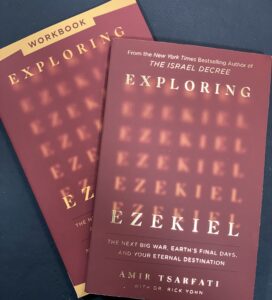
Exploring Ezekiel Book and Workbook
by Amir Tsarfati and Dr. Rick Yohn

I had a reader ask, in a comment,
how I would use this pair in a small group Bible study.
I decided you deserved to see my answer. So here you go!

My answer is assuming you purchased at least one copy of the workbook.

If I were doing the study…

Week 1 would be introducing the material. 

I would either read (or have a few people read) the introduction of Exploring Ezekiel: “Who Is This God?”

Then we’d discuss what we’ve just read. I’d suggest the leader read it ahead of time to come up with prompts in case no one jumps in with their thoughts right away. (normal)

In the second hour, or at least the last half hour, I’d head over to the workbook and really look at “How to Use This Workbook.” 

It lays out a study path that many/most may not be familiar with, so it would be good to consider going over it, helping everyone understand it, and then perhaps practice applying this technique to a familiar passage of Scripture.

Ideally, everyone bought both the book and workbook. If this is the case, I’d suggest having everyone spend each week reading the chapter in Exploring Ezekiel and working in the corresponding chapter in the workbook.

Then, when you come back the next week, you have two hours in which you can discuss everyone’s thoughts and conclusions in depth. This is one of the most powerful aspects of group Bible study, because you never know when something someone else says will turn on a neon sign for you.

And, although you do want to keep things running properly and under control, don’t be surprised when you encounter the occasional rabbit trail. I’d suggest you be flexible enough that you can judiciously explore at least a little ways down those trails as you feel the Spirit lead you.

I’m excited for you and your friends!

If you decide to have a Bible study with these books,
I’m excited for you too! And I’d love to hear how it goes!

Celebrating Jesus!
Tammy C